Monday, November 16, 2015
What Google Can Learn from Amazon
Google are getting into retailing cell-phone service with Project Fi.
If you think about it, this is the first time Google has really gotten into retailing to the general public. Up to now, all of their services have been free to the consumer and paid for by business.
But it seems that, in their hubris, Google have decided to “wing it” in retail, rather than learning from the practices of people who've perfected it. Their first lesson is that the rules are different for a mom & pop store and a megacorp. In particular, where a small operation can often get away with an apology when they mess up; a megacorp can't.
The small operation gets away with an apology when a person in a genuine position of responsibility explains the extenuating circumstances and apologises to the customer with a modicum of sincerity. Even a bodega will usually make some kind of tangible gesture — a freebie, a sample, a discount, or something — by way of apology.
Logistically, a multi-billion dollar corporation cannot apologise in the same way, or the Board would have no time for anything but apologies. Consumers are also cynical of large corporations, and understand that the only meaningful way for a large corporation to express appreciation or contrition is with something of monetary value.
So a scripted pseudo-personal apology from a powerless support drone in Nevada is hollow and disingenuous, equivalent in sincerity to silently mouthing “I'm sorry” while giving the middle finger and winking.
The trick for a corporation is to give the disgruntled customer something that they value more highly than its cost to the company. Amazon understand this very well. They will give you a $5 or $10 credit or a month's free extension to your Prime subscription at the drop of a hat. You can't spend it anywhere else, you have to remain a customer to use it, they're guaranteed to get it back, they only pay cost for what you buy with it, and you'll probably buy something that you otherwise wouldn't that's worth more than the credit. Ultimately, it probably only costs them $1 to give you $5.
Google may be the Titans of Online Searching & Advertising, but they can still learn a thing or two from the Titans of Online Retail.

Google Project Fi(asco)
If you haven't heard, Google is getting into cell service with Project Fi(asco).
If the technology works, the fee structure has the potential to put the cat amongst the pigeons of the cell service oligopoly. I love it!
Like many Google projects going all the way back to Gmail, there's an “invite” stage before it's rolled out everyone, so I applied for, and got, an invitation. Yay!
But if you're thinking of doing the same, I'd say “don't bother”, for a number of reasons:
All 3 major cellphone service providers in the US are in the Customer Service Hall of Shame (positions 5, 7, & 8). Looks like Google wants to join them. What a pity.
If the technology works, the fee structure has the potential to put the cat amongst the pigeons of the cell service oligopoly. I love it!
Like many Google projects going all the way back to Gmail, there's an “invite” stage before it's rolled out everyone, so I applied for, and got, an invitation. Yay!
But if you're thinking of doing the same, I'd say “don't bother”, for a number of reasons:
- the sign-up process is misleading: your phone won't, in fact, leave the warehouse in the advertised 1-2 days, but in 5-6 weeks;
- it took filling out an online form followed by a 3-day farce of 11 emails to and from 4 different support personnel — Melissa, Dave the Would-Be Helper (marks for effort), Christina the Rude (or illiterate), and Tenisha — to arrive at the conclusion: cancelling the order;
- none of these people have the power to actually do anything unless you count writing chirpy corporate inanities and regurgitating FAQs;
- if my experience is representative, one in four won't even bother reading your email before “replying”; and
- at no time did they offer any kind of meaningful gesture of goodwill.
All 3 major cellphone service providers in the US are in the Customer Service Hall of Shame (positions 5, 7, & 8). Looks like Google wants to join them. What a pity.
Tuesday, November 3, 2015
Shortcomings of SFCU Online Banking
Like most people at Stanford, I bank with Stanford Federal Credit Union (SFCU).
Their lacklustre online banking system is fine for rudimentary day-to-day stuff, but it has a few dusty corners with some, frankly, ludicrous omissions and worryingly amateurish “features”.
Let's stick with tradition and talk about “Alice and Bob”, who are both SFCU customers.
I can think of three things off the top of my head...
Wrong.
Ironically, Bob can set up scheduled transfers to any account at any other bank using the ABA routing code and account number, but the external application/service SFCU use rejects SFCU's own ABA routing number. After some back-and-forth with SFCU customer service, their solution — to Bob wanting to set up a scheduled monthly transfer to Alice's account at the same branch of the same bank — was to mail Alice a monthly check.
Just thinking about it makes me smile. Was I wrong when I said “ludicrous”? Maybe I should've said “hilarious”.
Easy-peasy, right?
Wrong.
The “feature” simply doesn't work. After some back-and-forth with customer support, they tell Alice that she and Bob will just have to come in and fill out a paper form.
Here's how it should work:
Either support the feature or don't. It's not hard.
The online banking system has an integrated messaging system for customer support. It also has a timer that logs you out automatically after a period of time. I'm sure you can guess… Yes, it can try to log you out while you're typing. Apparently resetting the JavaScript timer that's already there on every keystroke was too much.
But that doesn't really concern me. Again, it's just an oversight, and because you are prompted before being automatically logged out, it's not a critical issue.
What gives me cause for concern is that the messaging system only allows alphanumeric characters plus a list of “allowed special characters”.
What this suggests is that the developers, quite rightly, feared:
If there's one thing I don't want to suspect was developed by dilettantes and acceptance tested by ignoramuses, it's the online banking system I use.
Their lacklustre online banking system is fine for rudimentary day-to-day stuff, but it has a few dusty corners with some, frankly, ludicrous omissions and worryingly amateurish “features”.
Let's stick with tradition and talk about “Alice and Bob”, who are both SFCU customers.
I can think of three things off the top of my head...
Shortcoming #1
Suppose Alice and Bob have some shared monthly expense that happens to be paid out of Alice's checking account. Bob wants to set up a scheduled transfer of, say, $100 to Alice's checking account on the 1st of every month. It was easy for Bob to do one-time transfers to Alice, and it was easy for Bob to set up scheduled transfers between his own savings and checking accounts, so putting the two together is doable, right?Wrong.
Ironically, Bob can set up scheduled transfers to any account at any other bank using the ABA routing code and account number, but the external application/service SFCU use rejects SFCU's own ABA routing number. After some back-and-forth with SFCU customer service, their solution — to Bob wanting to set up a scheduled monthly transfer to Alice's account at the same branch of the same bank — was to mail Alice a monthly check.
Just thinking about it makes me smile. Was I wrong when I said “ludicrous”? Maybe I should've said “hilarious”.
Shortcoming #2
Suppose Alice and Bob have a shared checking account. They want to open a second one. Bob clicks through to the screen for opening a new account, and there — much to his surprise and satisfaction — is a check-box that says “Share this account with Alice”. Strangely, Alice doesn't see this check-box when she tries, but Bob ticks the box and moves on.Easy-peasy, right?
Wrong.
The “feature” simply doesn't work. After some back-and-forth with customer support, they tell Alice that she and Bob will just have to come in and fill out a paper form.
Here's how it should work:
- The New Account page has a shared account option (via a tab, separate page, or whatever, the HCI/UI/UX details are unimportant to the current argument) with, inter alia, a text-box to enter the other customer's customer number
- Alice fills in Bob's customer number and clicks OK.
- Bob gets an email, clicks on a link, logs in, and it takes him to a page that says “Alice wants to open a shared checking account with you.”; it has 2 buttons “Accept” and “Decline”.
- If Bob accepts, the account is opened.
- If Bob declines, it isn't and Alice gets a message to that effect
Either support the feature or don't. It's not hard.
Shortcoming #3
The final shortcoming is simultaneously the most trivial and the most concerning. The previous two are oversights. Irritating, perhaps, but really just oversights or missing features.The online banking system has an integrated messaging system for customer support. It also has a timer that logs you out automatically after a period of time. I'm sure you can guess… Yes, it can try to log you out while you're typing. Apparently resetting the JavaScript timer that's already there on every keystroke was too much.
But that doesn't really concern me. Again, it's just an oversight, and because you are prompted before being automatically logged out, it's not a critical issue.
What gives me cause for concern is that the messaging system only allows alphanumeric characters plus a list of “allowed special characters”.
What this suggests is that the developers, quite rightly, feared:
- a SQL injection attack; and/or
- HTML special characters — like “<”, “>”, and “&” — being entered by the client, and later interpreted by the customer service agent's browser, such that the message entered by the client was not faithfully presented to the customer service agent.
If there's one thing I don't want to suspect was developed by dilettantes and acceptance tested by ignoramuses, it's the online banking system I use.
Friday, June 19, 2015
Using a C++ Flex Lexer with a C++ Bison Parser
I recently found myself revisiting lexing and parsing as part of my research. It's one of those cases where I would get away with ad-hoc parsing with line-splitting and regular expression matching, but the canonical alternative might ultimately turn out to be worth some extra effort for a number of reasons.
Many years ago, I wrote a SQL DDL parser as part of some object-relational mapping research into a “mutual containment” object model for transparently representing junction tables in relational databases. Even if I do say so myself, it was a neat idea. I don't know if anyone else has since thought of it independently and implemented it.
So, I decided to revisit flex and bison, the most popular versions of the venerable and classic compiler construction tools, lex and yacc. This time around, though, I anticipated a possible need for two parser/lexer subsystems, so I was interested in the C++ capabilities of both tools, since the “vanilla” C code they emit uses global variables.
The GNU Bison Manual has A Complete C++ Example that, unfortunately, rather narrowly interprets what it means to be “complete C++ example” to mean “an example where the bison bits are in C++”, and uses the vanilla flex lexer with global variables.
I found a few examples of using flex and bison with C++, but even the best of them only address one or the other, go off on irrelevant tangents, are short on explanation, contain outright misleading comments, use deprecated constructs, or all of the above.
All I wanted, was the minimal example of how to use a C++ flex lexer with a C++ bison parser. Some kind of “addendum” to the “complete” C++ example from the bison manual would be perfect!
*Crickets*.
So now, ladies and gentlemen, for your enjoyment, I have added to my Bitbucket “miscellany”, such an elucidation of Modifying the Bison “Complete C++ Example” to Use a C++ Flex Lexer as I formerly desired.
It's not as easy as it sounds.
Many years ago, I wrote a SQL DDL parser as part of some object-relational mapping research into a “mutual containment” object model for transparently representing junction tables in relational databases. Even if I do say so myself, it was a neat idea. I don't know if anyone else has since thought of it independently and implemented it.
So, I decided to revisit flex and bison, the most popular versions of the venerable and classic compiler construction tools, lex and yacc. This time around, though, I anticipated a possible need for two parser/lexer subsystems, so I was interested in the C++ capabilities of both tools, since the “vanilla” C code they emit uses global variables.
The GNU Bison Manual has A Complete C++ Example that, unfortunately, rather narrowly interprets what it means to be “complete C++ example” to mean “an example where the bison bits are in C++”, and uses the vanilla flex lexer with global variables.
I found a few examples of using flex and bison with C++, but even the best of them only address one or the other, go off on irrelevant tangents, are short on explanation, contain outright misleading comments, use deprecated constructs, or all of the above.
All I wanted, was the minimal example of how to use a C++ flex lexer with a C++ bison parser. Some kind of “addendum” to the “complete” C++ example from the bison manual would be perfect!
*Crickets*.
So now, ladies and gentlemen, for your enjoyment, I have added to my Bitbucket “miscellany”, such an elucidation of Modifying the Bison “Complete C++ Example” to Use a C++ Flex Lexer as I formerly desired.
It's not as easy as it sounds.
Tuesday, October 7, 2014
I'm a Wingnut and a Moonbat: Part 2
In an earlier post, I explained why I might be considered a “wingnut”. Briefly: I don't support the California assault weapons ban because it restricts access to certain firearms based on their cosmetic appearance rather than their functionality. Now I have to explain why I'm a “moonbat”.
When I say that the difference between the murder and assault rates in the US and the analogous rates in Western European countries can be explained almost entirely by economic inequality, I get accused of being a socialist, which I am, although not in the American sense of the word (where socialism is conflated with communism, totalitarianism, and oppression).
The evidence, however, is clear: about three quarters of the variance in murder and assault rates is explained by income inequality. This means that if you want to reduce violent crime in the US, you can address at most one quarter of the problem with all other measures combined: neither harsher sentences, favored by the right, nor gun control, favored by the left, are nearly as strongly correlated with violent crime as income inequality. Neither gun control nor prison sentences are statistically correlated with violent crime rates to a significant degree.
So, if you actually want to address violent crime, the elephant in the room is that you must address poverty, and not just absolute poverty, but relative poverty. To do that, you need to ensure that the distribution of wealth between rich and poor favors the poor more than it has in the past.
What policy changes ought to be introduced to ensure that the poor get a greater slice of the pie, and the rich a smaller slice, is open to debate, but any way you cut it, this sounds far too much like redistribution of wealth for any right-winger to resist the temptation to call me a “moonbat”.
When I say that the difference between the murder and assault rates in the US and the analogous rates in Western European countries can be explained almost entirely by economic inequality, I get accused of being a socialist, which I am, although not in the American sense of the word (where socialism is conflated with communism, totalitarianism, and oppression).
The evidence, however, is clear: about three quarters of the variance in murder and assault rates is explained by income inequality. This means that if you want to reduce violent crime in the US, you can address at most one quarter of the problem with all other measures combined: neither harsher sentences, favored by the right, nor gun control, favored by the left, are nearly as strongly correlated with violent crime as income inequality. Neither gun control nor prison sentences are statistically correlated with violent crime rates to a significant degree.
So, if you actually want to address violent crime, the elephant in the room is that you must address poverty, and not just absolute poverty, but relative poverty. To do that, you need to ensure that the distribution of wealth between rich and poor favors the poor more than it has in the past.
What policy changes ought to be introduced to ensure that the poor get a greater slice of the pie, and the rich a smaller slice, is open to debate, but any way you cut it, this sounds far too much like redistribution of wealth for any right-winger to resist the temptation to call me a “moonbat”.
Friday, October 3, 2014
I'm a Wingnut and a Moonbat: Part 1
For those unfamiliar with American political discourse, a “wingnut”, so the stereotype goes, is a gun-totin' redneck Evangelical Christian Republican-voting moron who gets all of his/her opinions straight from Rush Limbaugh. A “moonbat”, by contrast, is a gun-grabbin' city-dwelling atheist Democrat-voting commie who gets all of his/her unconsidered opinions straight from The Daily Show.
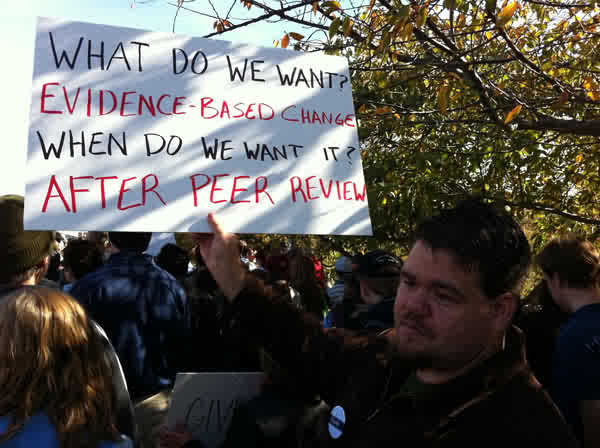
Now, you might think that an advocate of evidence-based policy might end up somewhere in the middle and would be neither a wingnut nor a moonbat, but it turns out that such a person is actually both.
Here's one example (I'll address the other side in Part 2)...
California has, arguably, the strictest gun control of any state. I come from a place where firearm licensing is immeasurably stricter, basically the strictest in the world. There is no legal provision for a license for a handgun or a center-fire rifle. You can get a license for a shotgun, double-barreled or pump with a 3 round magazine, or a .22 rim-fire rifle, but that's it and it's not easy. Broadly speaking, as a people, we have no tradition of firearms ownership and we neither need nor want firearms. Our police are mostly unarmed, and we like it that way.
As a person living in the US on a visa, I can't legallyown buy (see edit note, below) a firearm. I find them interesting, of course, as any kid who played cops & robbers patterned after American TV shows might, but basically, I have no dog in this fight. I'm undecided whether, if I were allowed, I would end up having a ridiculous arsenal of firearms just because they're cool and fun and I'm a big kid, or I just wouldn't bother because they're dangerous, expensive, and the likelihood of ever actually needing to use one in the wealthy suburban part of California where I live is essentially zero.
But here's the thing. I read California's so-called “assault weapons” ban, and it is, by any objective standard, absurd. It is absurd, not because of its abuse of terminology (it actually bans some facsimiles of assault rifles), but because it regulates the appearance of the firearm, not any feature of its operation. In short, it regulates only the cosmetic appearance of the firearm. Don't believe me?
OK...
This is illegal to buy, sell, import, etc. in California (legal to own if grandfathered in). You will probably be charged with a felony (technically, it's a “wobbler”) if you are caught with one of these and can't prove that you bought it before the ban:
This functionally identical rifle — firing identical rounds with an identical mechanism from an identical magazine down an identical barrel at an identical rate of one per trigger pull — is legal to buy and own in California (assuming in both cases that the magazine holds no more than 10 rounds, despite looking like 20 or 30 round magazines):
What makes the legal difference?
The pistol-style grip above is illegal; the one below, fused to the stock, is legal. That's the difference. And don't think that federal laws are much better. If you add a handle-like grip to the barrel of either of the above without permission from the ATF and a $200 tax, that's a felony.
This, we are supposed to believe, is what is going to protect children from a Newtown-style shooting: making guns have the right kind of handle and making it a felony to have the wrong kind of handle or, perish the thought, an extra handle.
So now you know why I agree with the gun rights activists and say “the California Assault Weapons Ban is one of the most astonishingly stupid things I have ever heard of”, but only wingnuts say things like that, so I must be a wingnut, right?
Edit: in the original version of this post, I said that (as someone here on a visa) I couldn't legally own a firearm. That's probably not exactly true. 18 USC 922 (d)(5)(B) criminalizes the sale, or other transfer, of a firearm or ammunition to a person “who, being an alien— [...] has been admitted to the United States under a nonimmigrant visa [...]” (that's me). Not that I'd realistically consider doing it, but it might be perfectly legal, at least under federal law, for me to make a firearm (e.g. from an 80% complete lower) and ammunition (e.g. by reloading), since the power that the federal government uses for 18 USC 922 derives from the Commerce Clause and so, strictly speaking, regulates only interstate or international trade. There's even an argument that I could legally purchase ammunition manufactured in California (since it would not involve interstate or international commerce and, therefore, cannot fall under the authority granted by the Commerce Clause). In any case, it's a minor technicality, there's probably some other law that prohibits it at the federal or state level, and I'm not so enamoured with the idea of firearms ownership that I'd bother risking it. Nevertheless, I've changed “own” to “buy” since, as far as I know, that's more accurate.
Now, you might think that an advocate of evidence-based policy might end up somewhere in the middle and would be neither a wingnut nor a moonbat, but it turns out that such a person is actually both.
Here's one example (I'll address the other side in Part 2)...
California has, arguably, the strictest gun control of any state. I come from a place where firearm licensing is immeasurably stricter, basically the strictest in the world. There is no legal provision for a license for a handgun or a center-fire rifle. You can get a license for a shotgun, double-barreled or pump with a 3 round magazine, or a .22 rim-fire rifle, but that's it and it's not easy. Broadly speaking, as a people, we have no tradition of firearms ownership and we neither need nor want firearms. Our police are mostly unarmed, and we like it that way.
As a person living in the US on a visa, I can't legally
But here's the thing. I read California's so-called “assault weapons” ban, and it is, by any objective standard, absurd. It is absurd, not because of its abuse of terminology (it actually bans some facsimiles of assault rifles), but because it regulates the appearance of the firearm, not any feature of its operation. In short, it regulates only the cosmetic appearance of the firearm. Don't believe me?
OK...
This is illegal to buy, sell, import, etc. in California (legal to own if grandfathered in). You will probably be charged with a felony (technically, it's a “wobbler”) if you are caught with one of these and can't prove that you bought it before the ban:
 |
| Illegal “Assault Weapon” in California |
 |
| Legal “Sporting Rifle” in California |
The pistol-style grip above is illegal; the one below, fused to the stock, is legal. That's the difference. And don't think that federal laws are much better. If you add a handle-like grip to the barrel of either of the above without permission from the ATF and a $200 tax, that's a felony.
This, we are supposed to believe, is what is going to protect children from a Newtown-style shooting: making guns have the right kind of handle and making it a felony to have the wrong kind of handle or, perish the thought, an extra handle.
Wow!
So now you know why I agree with the gun rights activists and say “the California Assault Weapons Ban is one of the most astonishingly stupid things I have ever heard of”, but only wingnuts say things like that, so I must be a wingnut, right?
Edit: in the original version of this post, I said that (as someone here on a visa) I couldn't legally own a firearm. That's probably not exactly true. 18 USC 922 (d)(5)(B) criminalizes the sale, or other transfer, of a firearm or ammunition to a person “who, being an alien— [...] has been admitted to the United States under a nonimmigrant visa [...]” (that's me). Not that I'd realistically consider doing it, but it might be perfectly legal, at least under federal law, for me to make a firearm (e.g. from an 80% complete lower) and ammunition (e.g. by reloading), since the power that the federal government uses for 18 USC 922 derives from the Commerce Clause and so, strictly speaking, regulates only interstate or international trade. There's even an argument that I could legally purchase ammunition manufactured in California (since it would not involve interstate or international commerce and, therefore, cannot fall under the authority granted by the Commerce Clause). In any case, it's a minor technicality, there's probably some other law that prohibits it at the federal or state level, and I'm not so enamoured with the idea of firearms ownership that I'd bother risking it. Nevertheless, I've changed “own” to “buy” since, as far as I know, that's more accurate.
Monday, August 25, 2014
The Problem with Fracking: Part 3
In the first and second parts of this series, I argued that aquifer contamination from the completion in a fracked gas well is highly improbable, and that fracking fluid, as distinct from waste water, is benign.
In this part, which could easily be titled “When Fracktivism Isn't About Fracking”, I take a look at “fraccidents” in Pennsylvania.
Pennsylvania has been a gas-producing state since the mid 19th century, but has seen a boom in gas production since fracking enabled the exploitation of the Marcellus shale. There are estimated to be 350,000 oil and gas wells in Pennsylvania, the vast majority of which are old, inactive wells. EIA data shows a sevenfold increase in gas production in the four years after horizontal drilling (more-or-less synonymous with fracking) began in earnest around 2008. Currently, there are about 9,000 active wells in Pennsylvania, with a new well being drilled every day (on average). The following EIA animation shows wells drilled in Pennsylvania between January 2005 and April 2012:
All in all, I figure that the Earth Justice “fraccidents” represent 45 separate events.
But how many of these are actually to do with fracking?
Let's have a look at a few of these fraccidents...
Sticking out like a sore thumb, there's a lonely skull & crossbones about 30 miles south of Harrisburg, and over 100 miles east of any well (fracked or otherwise) known to EIA. It turns out that this is actually a drilling mud spill that happened when a gas pipeline was being drilled 13 feet under a creek. This might be related to the Pennsylvania gas industry, but has nothing whatsoever to do with fracking and, even if it did, it's a very minor event. Equally, representing a spill of 2-3 cubic yards of bentonite (a kind of clay) with a skull and crossbones reeks of alarmism.
More appropriate use of a “skull & crossbones” is in the southwest corner (as it happens, the event actually happened in West Virginia, but appears in Pennsylvania, presumably due to some innocent error), where 10,000 fish were killed over a 30-mile stretch of river. What caused this? An algal bloom caused by discharges from coal-mining. Nothing to do with fracking, or even the oil & gas industry.
There's a water-contamination event in Hickory (just west of Pittsburgh) in December 2005. The problem is that the first horizontal well in this area was recorded by EIA in September 2007. So this event, if it was was due to a gas well at all, was due to a conventional well and, again, nothing to do with fracking.
There are several examples of compressors catching fire, a faulty tailgate on a truck allowing drill cuttings to fall out onto the road, a truck leaking hydrochloric acid, drilling mud spills, diesel spills, or methane leaks. These are nothing whatsoever to do with hydraulic fracturing: they might just as well have happened with any kind of gas well, fracked or not, or in another industry entirely.
In fairness, there are several events that can plausibly be linked to fracking in some way. In most cases, these are either actual wastewater leaks or events probably caused by wastewater leaks. For example, there are several cases of high levels of metals, including arsenic, and aromatics, including benzene, being found in soil or drinking water. Although the causal connection with fracking is tenuous, they are most likely attributable to wastewater leaks, and the wastewater is from frack-jobs. There have been a number of casing and cementing failures that probably wouldn't have happened in a conventional well, probably happening due to the extreme pressure used during fracking.
So, how many of the 45 “fraccidents” survive cursory fact-checking?
Being generous? About half. The other half range from outright lies (fish-kills due to coal-mining) to gross exaggeration (cuttings falling from a truck) to falsely attributing accidents to fracking when they're just associated with the gas industry generally (compressor accidents, pipeline leaks).
So is, say, 25 real “fraccidents” too many? Maybe. The reality is that oil & gas extraction is dangerous. All extractive industries carry the potential for pollution, whether that's fracking for shale gas or mining neodymium for the permanent magnets in wind turbines. With 9,000 active wells in Pennsylvania producing 4 trillion cubic feet of gas over 6 years, 25 accidents doesn't seem like a whole lot to me.
It isn't a great surprise that much fracktivism is disingenuous. After all, the movie that essentially started the whole anti-fracking hysteria, Gasland (on Netflix), is a stunningly dishonest piece, as exposed by FrackNation (also on Netflix). The truth is that almost all real “fraccidents” are wastewater leaks, which are actually pretty rare, but do happen occasionally.
The idea that we need better regulation of wastewater storage and disposal practices is worthy of consideration, and enforcement must be adequately resourced, but the way to argue these points is not with alarmist lies, hysterical exaggeration, and presenting personal anecdotes as fact.
Josh Fox (Gasland) found a dozen people who claim that “fracking” has destroyed their lives. Phelim McAleer (FrackNation) found a dozen who claim that “fracking” is essential to their economic survival. Neither is a sound basis for forming a personal opinion, much less government policy. I could easily find a dozen people who claim to have been abducted and anally probed by aliens. I could make an engaging and emotional documentary about it. But that doesn't mean that we need a government policy to deal with the alien abduction problem. Policy should be based on expert analysis of evidence.

In this part, which could easily be titled “When Fracktivism Isn't About Fracking”, I take a look at “fraccidents” in Pennsylvania.
Pennsylvania has been a gas-producing state since the mid 19th century, but has seen a boom in gas production since fracking enabled the exploitation of the Marcellus shale. There are estimated to be 350,000 oil and gas wells in Pennsylvania, the vast majority of which are old, inactive wells. EIA data shows a sevenfold increase in gas production in the four years after horizontal drilling (more-or-less synonymous with fracking) began in earnest around 2008. Currently, there are about 9,000 active wells in Pennsylvania, with a new well being drilled every day (on average). The following EIA animation shows wells drilled in Pennsylvania between January 2005 and April 2012:
As it happens, this is more-or-less the same time span covered by Earth Justice's record of “fraccidents” in Google Maps. In mid-late August, 2014 (the time of writing of this blog entry), they place 38 “skull and crossbones” symbols over Pennsylvania for what are, presumably, poisoning events of some kind resulting in death or serious injury; at least a major fish-kill or something, right? You don't use a skull and crossbones to indicate something like rocks falling from the back of a truck with a faulty tailgate, after all, right? It turns out that you do.
 |
| “Fraccidents” in Pennsylvania |
When you click on a skull & crossbones, you sometimes find that it corresponds to two or three separate events that might be revealed at a higher zoom level (or not; sometimes they are in the associated text or linked articles). It can sometimes be hard to disentangle where and when, exactly, a particular event occurred since, often, linked articles make reference to events that happened elsewhere in Pennsylvania at some indeterminate time in the past (the Zimmerman vs. Atlas Energy lawsuit is mentioned several times). Equally, there are occasions when an opportunity to include a separate skull and crossbones has been missed.
 |
| “Fraccidents” Overlaid on EIA Well Data |
But how many of these are actually to do with fracking?
Let's have a look at a few of these fraccidents...
Sticking out like a sore thumb, there's a lonely skull & crossbones about 30 miles south of Harrisburg, and over 100 miles east of any well (fracked or otherwise) known to EIA. It turns out that this is actually a drilling mud spill that happened when a gas pipeline was being drilled 13 feet under a creek. This might be related to the Pennsylvania gas industry, but has nothing whatsoever to do with fracking and, even if it did, it's a very minor event. Equally, representing a spill of 2-3 cubic yards of bentonite (a kind of clay) with a skull and crossbones reeks of alarmism.
More appropriate use of a “skull & crossbones” is in the southwest corner (as it happens, the event actually happened in West Virginia, but appears in Pennsylvania, presumably due to some innocent error), where 10,000 fish were killed over a 30-mile stretch of river. What caused this? An algal bloom caused by discharges from coal-mining. Nothing to do with fracking, or even the oil & gas industry.
There's a water-contamination event in Hickory (just west of Pittsburgh) in December 2005. The problem is that the first horizontal well in this area was recorded by EIA in September 2007. So this event, if it was was due to a gas well at all, was due to a conventional well and, again, nothing to do with fracking.
There are several examples of compressors catching fire, a faulty tailgate on a truck allowing drill cuttings to fall out onto the road, a truck leaking hydrochloric acid, drilling mud spills, diesel spills, or methane leaks. These are nothing whatsoever to do with hydraulic fracturing: they might just as well have happened with any kind of gas well, fracked or not, or in another industry entirely.
In fairness, there are several events that can plausibly be linked to fracking in some way. In most cases, these are either actual wastewater leaks or events probably caused by wastewater leaks. For example, there are several cases of high levels of metals, including arsenic, and aromatics, including benzene, being found in soil or drinking water. Although the causal connection with fracking is tenuous, they are most likely attributable to wastewater leaks, and the wastewater is from frack-jobs. There have been a number of casing and cementing failures that probably wouldn't have happened in a conventional well, probably happening due to the extreme pressure used during fracking.
So, how many of the 45 “fraccidents” survive cursory fact-checking?
Being generous? About half. The other half range from outright lies (fish-kills due to coal-mining) to gross exaggeration (cuttings falling from a truck) to falsely attributing accidents to fracking when they're just associated with the gas industry generally (compressor accidents, pipeline leaks).
So is, say, 25 real “fraccidents” too many? Maybe. The reality is that oil & gas extraction is dangerous. All extractive industries carry the potential for pollution, whether that's fracking for shale gas or mining neodymium for the permanent magnets in wind turbines. With 9,000 active wells in Pennsylvania producing 4 trillion cubic feet of gas over 6 years, 25 accidents doesn't seem like a whole lot to me.
It isn't a great surprise that much fracktivism is disingenuous. After all, the movie that essentially started the whole anti-fracking hysteria, Gasland (on Netflix), is a stunningly dishonest piece, as exposed by FrackNation (also on Netflix). The truth is that almost all real “fraccidents” are wastewater leaks, which are actually pretty rare, but do happen occasionally.
The idea that we need better regulation of wastewater storage and disposal practices is worthy of consideration, and enforcement must be adequately resourced, but the way to argue these points is not with alarmist lies, hysterical exaggeration, and presenting personal anecdotes as fact.
Josh Fox (Gasland) found a dozen people who claim that “fracking” has destroyed their lives. Phelim McAleer (FrackNation) found a dozen who claim that “fracking” is essential to their economic survival. Neither is a sound basis for forming a personal opinion, much less government policy. I could easily find a dozen people who claim to have been abducted and anally probed by aliens. I could make an engaging and emotional documentary about it. But that doesn't mean that we need a government policy to deal with the alien abduction problem. Policy should be based on expert analysis of evidence.
Subscribe to:
Posts (Atom)